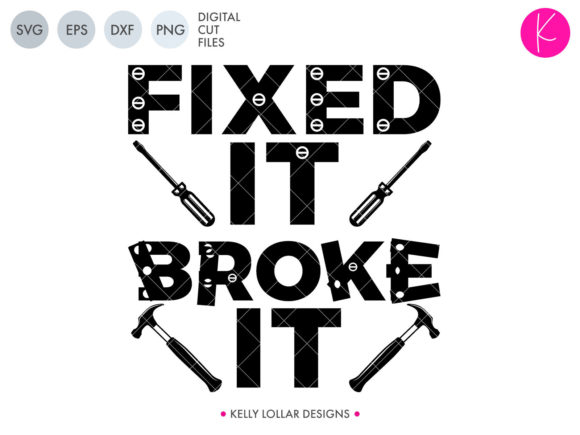
Fixed It Broke It: A Designer’s Review
As an embroidery designer who has spent countless hours digitizing, testing, and stitching out thousands of files, I approach every new machine embroidery design with a mix of curiosity and caution. We have all been there: you find a cute graphic online, load it onto your machine, and hope for the best. But when you are running a craft business or creating personalized gifts for clients, hope is not a strategy. You need reliability, clarity, and aesthetic appeal. That is why I took a close look at Fixed It Broke It, a playful graphics asset aimed squarely at the Father’s Day market and the ever-popular "Daddy and Me" trend.
First Impressions and Visual Personality
The first thing that strikes me about Fixed It Broke It is its inherent charm. It captures a very specific, relatable dynamic between a father and his children. The phrase suggests a narrative: Dad is the fixer, but the kids are the ones creating the projects that need fixing. This storytelling element is crucial in modern embroidery. Customers are not just buying a stitch pattern; they are buying a sentiment. The layout appears balanced, likely featuring bold, readable typography that pairs well with simple iconography, such as tools or playful characters. For a designer, this balance is key. If the text is too thin, it gets lost in the fabric texture. If the icons are too dense, the stitch count skyrockets, and the fabric puckers. From a visual standpoint, this design feels approachable and warm, making it an excellent candidate for handmade products that rely on emotional connection.
Real-World Application: The Matching Set Scenario
To truly evaluate an embroidery file, I mentally place it into a real-world scenario. Imagine a small shop owner preparing for the spring rush. They want to create a matching set for Father’s Day: a adult-sized sweatshirt for Dad and a onesie or toddler tee for the child. This is where Fixed It Broke It shines. The theme is perfectly suited for custom apparel. When I visualize this on a heather grey sweatshirt, I can see how the contrast of white or navy thread would pop against the fabric. The design’s simplicity allows it to scale well. On the adult garment, it can sit prominently on the chest or as a larger back print. On the baby item, it needs to be scaled down significantly. This versatility is a major selling point for Etsy sellers and boutique owners who want to maximize the utility of a single digital purchase.
Beyond apparel, I considered this design for a tote bag design. Canvas bags are sturdy and handle higher stitch densities well. Embroidering this quote on a natural cotton tote creates a rugged, utilitarian vibe that fits the "Mr. Fix It" persona perfectly. It transforms a simple bag into a functional piece of personalized gift art. Similarly, an embroidered patch using this design could be a hit. Patches allow for dense stitching without worrying about fabric distortion, and they can be ironed onto jackets, hats, or tool bags later. This flexibility adds value to the design assets you offer your customers.
Technical Considerations for Stitching Success
While the concept is strong, the execution depends on technical details. As a reviewer, I must advise caution regarding stitch density and fabric choice. If this design relies heavily on fill stitch areas for solid shapes, it may pull on lightweight fabrics. For a sweatshirt embroidery project, this is rarely an issue because fleece and jersey knits are stable. However, if you attempt to stitch this on a thin cotton t-shirt without proper support, you risk puckering. Always use a cut-away stabilizer for knits to ensure the finished product remains flat and professional.
Another critical factor is the size of the lettering. In many "quote" style designs, the text can become illegible if scaled down too far. If you are creating a baby embroidery item, such as a bib or a small hat, you must test the smallest version of the design on scrap fabric first. Check if the tiny details of the letters hold up. If the design uses a satin stitch for the text borders, ensure the column width is sufficient for the needle to penetrate cleanly. Tiny satin columns on thick towels can sometimes cause thread breaks or uneven coverage. A quick test stitch on your specific machine is non-negotiable before committing to customer orders.
Navigating Fabric and Hoop Constraints
Where should you use Fixed It Broke It carefully? Curved surfaces like caps require special attention. If the design is wide, it might not fit comfortably on a standard cap hoop without distorting the shape. In such cases, consider splitting the design or using a smaller version. Additionally, dark fabrics present a challenge for thread color selection. If the design includes fine lines, using a contrasting thread color is essential for visibility. A running stitch detail might disappear on a black hoodie if the thread is not bright enough. Always create printable mockups in both light and dark variations to show customers how the design will look on different backgrounds. This transparency builds trust and reduces return requests.
Commercial Value and Brand Consistency
For the Etsy seller or creative entrepreneur, the commercial viability of a design is paramount. Fixed It Broke It taps into a seasonal niche—Father’s Day—but its theme is timeless enough for year-round sales in niches like DIY enthusiasts or handyman families. Using this in your craft business can help establish a brand voice that is humorous, family-oriented, and practical. When you present this as part of a cohesive collection, perhaps alongside other tool-themed or family-quote designs, it enhances your shop’s professionalism. Buyers engage more with shops that feel curated and thoughtful.
Furthermore, the quality of the digital embroidery file directly impacts your brand reputation. A clean, well-digitized design results in a high-quality finished product. Customers notice when stitches are neat, colors are vibrant, and the fabric lies flat. These subtle cues signal quality and justify higher price points. If you are selling this as a small shop product, ensure that your listing photos showcase the texture and dimension of the embroidery. Close-up shots of the stitch work can be just as persuasive as the overall product image.
Final Verdict and Practical Tips
In conclusion, Fixed It Broke It is a strong contender for your spring and summer embroidery lineup. Its strength lies in its relatable theme and versatility across various Crafts categories. However, success lies in the details. Before you list this in your store or stitch it for a client, take these steps:
- Test on Scrap Fabric: Always run a test stitch on the same type of fabric you plan to use for the final product. This helps you identify any tension issues or density problems.
- Check Thread Contrast: Ensure your thread colors stand out against the fabric. High contrast improves readability and visual appeal.
- Verify Licensing: Confirm the license terms provided with the graphics. Ensure you are allowed to sell finished items made with this design, especially if you are a commercial entity.
- Mind the Hoop Size: Check the dimensions of the design against your available hoops. Do not force a large design into a small hoop, as this can cause registration errors.
- Use Proper Stabilizer: Match your stabilizer to your fabric. Cut-away for knits, tear-away for wovens, and wash-away for delicate or textured materials.
By treating Fixed It Broke It with the respect it deserves as a professional design asset, you can create stunning, high-value items that resonate with customers. Whether it is a holiday embroidery gift or a staple in your commercial embroidery catalog, this design has the potential to be a bestseller if handled with care and precision. Happy stitching!