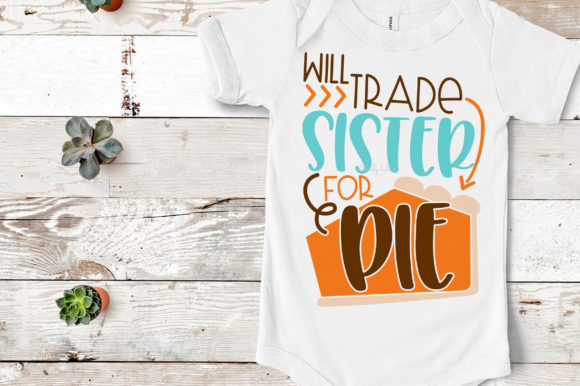
Reviewing Will Trade Sister for Pie Embroidery Design
As a designer who spends more time staring at stitch simulations than I care to admit, I have developed a keen eye for what works on fabric and what merely looks good on a screen. When I first pulled up the Will Trade Sister for Pie design, my initial reaction was one of amused recognition. It captures that specific, chaotic energy of sibling relationships perfectly. But amusement does not pay the bills or satisfy挑剔 customers. I needed to know if this graphic would hold up under the needle, especially when applied to real-world products for my craft business clients.
This is not just a cute phrase; it is a statement piece for matching siblings shirts and holiday gifts. The challenge with text-heavy graphics in the Crafts category is always legibility versus density. Let us break down how this embroidery file performs when moved from a digital asset to a tangible, stitched reality.
First Impressions and Visual Personality
The mood of Will Trade Sister for Pie is playful, slightly sarcastic, and deeply nostalgic. It appeals to the universal truth that while siblings may fight over everything today, those memories become cherished stories tomorrow. Visually, the layout feels balanced, but as an experienced reviewer, I immediately looked at the lettering. Is it too thin? Will the curves collapse into a mess of thread?
The design relies heavily on clear typography to deliver its punchline. In the world of machine embroidery design, clarity is king. If the customer has to squint to read the joke, the product fails. This graphic appears to prioritize readability, which is crucial for items like tote bags or sweatshirts where the viewer might be standing a few feet away. The visual personality suggests it belongs on casual, comfortable items rather than formal wear. It screams "family reunion" or "Christmas morning chaos," making it an ideal candidate for holiday embroidery projects.
Real-World Application: From Screen to Stitch
To truly evaluate this design, I imagined applying it to several common products I sell in my small shop. Here is how Will Trade Sister for Pie fares in different scenarios:
- Sweatshirt Embroidery: This is perhaps the strongest use case. The thick, cozy nature of a fleece or cotton blend sweatshirt provides a stable base for the stitches. The humor pairs well with the casual vibe of loungewear. I envision this centered on the chest or slightly off-center for a modern look.
- Tote Bag Design: A canvas tote is durable and flat, making it excellent for testing stitch density. However, canvas can be tricky if the stabilizer is not chosen correctly. The design needs to sit firmly without puckering the fabric around the letters.
- Custom Apparel for Kids: For baby embroidery or kids' shirts, the scale matters. If the design is too large, it overwhelms a small frame. If it is too small, the fine details of the font might get lost. This graphic works best on youth-sized apparel if scaled down carefully, ensuring the "Pie" element remains distinct.
- Embroidered Patch: Creating a patch allows for maximum control. You can use a heavy cut-away stabilizer and dense satin stitch borders to make the design pop. Patches are versatile, allowing customers to iron them onto jackets, hats, or backpacks later.
For Etsy sellers and handmade product creators, versatility is key. This design fits neatly into the niche of personalized gifts that do not feel overly sentimental. It is funny, relatable, and shareable on social media, which drives buyer engagement.
Technical Considerations and Stitching Challenges
While the concept is strong, the execution requires attention to detail. When working with any text-based embroidery file, you must consider stitch density and thread choice. Here are the technical hurdles I anticipate with Will Trade Sister for Pie:
Fabric Texture and Stability: Textured fabrics like terry cloth or waffle knit can obscure fine details. If you are stitching this on a kitchen towel or a textured blanket, ensure the design uses sufficient fill stitch or satin stitch width to bridge the gaps in the fabric weave. Thin or stretchy fabrics are risky. Without proper stabilization, the pulling of the thread can distort the letters, turning "Pie" into an unreadable blob. Always use a quality stabilizer appropriate for your fabric weight.
Thread Color Contrast: The success of this design hinges on contrast. Stitching white thread on a light gray shirt will render the message invisible. I recommend testing high-contrast combinations, such as dark navy on cream or bright red on white. Before committing to a final product, run a black and white mockup to check if the shapes remain distinct without color reliance.
Hoop Size and Placement: Check the dimensions of the embroidery file against your hoop size. If the design is wide, it may not fit in a standard 4x4 hoop, requiring a 5x7 or larger. Curved surfaces like caps present another challenge. The center of the cap is the only safe zone for a design of this width. Stitching too far to the side will cause distortion due to the curve of the brim.
Enhancing Product Value and Brand Consistency
Using a well-executed design like Will Trade Sister for Pie can significantly boost the perceived value of your handmade product. Customers trust professionalism. If the stitching is clean, the threads are trimmed, and the design is centered, they perceive the item as high-quality. This builds brand consistency for your small shop.
Moreover, humorous designs often have higher giftability. They are easy purchases for people struggling to find unique presents for sisters or brothers. By offering this as part of a collection of sibling-themed graphics, you create a cohesive brand narrative that resonates with buyers looking for connection and laughter.
Practical Designer Notes for Best Results
Before you list this as a digital embroidery file or stitch it onto your next batch of custom apparel, follow these practical steps:
- Test on Scrap Fabric: Never skip this step. Stitch the design on the exact fabric type you plan to use for the final product. Check for puckering, thread breaks, or loose ends.
- Inspect Small Details: Zoom in on the simulation. Are there any tiny connecting stitches that might look messy? If so, consider editing the file to remove unnecessary jumps or trim threads manually after stitching.
- Verify Licensing: If you are an Etsy seller or run a craft business, confirm the license terms for this graphics product. Ensure you have commercial rights to sell finished items featuring this design. Do not assume; check the documentation provided with the download.
- Check File Formats: Ensure the embroidery file format matches your machine (PES, DST, JEF, etc.). If the format is not listed, contact the seller before purchasing to avoid compatibility issues.
- Consider Washability: Products like baby clothes and kitchen towels undergo frequent washing. Use high-quality polyester threads that resist fading and shrinking to ensure the design lasts as long as the garment.
In conclusion, Will Trade Sister for Pie is a charming addition to any designer’s library of sibling-themed assets. It balances humor with visual clarity, making it suitable for a wide range of embroidery projects. By paying attention to fabric choice, stabilization, and thread contrast, you can transform this digital design into a standout finished product that customers will love to wear and share. It is a reminder that in the world of crafts, the best designs are those that tell a story worth stitching.