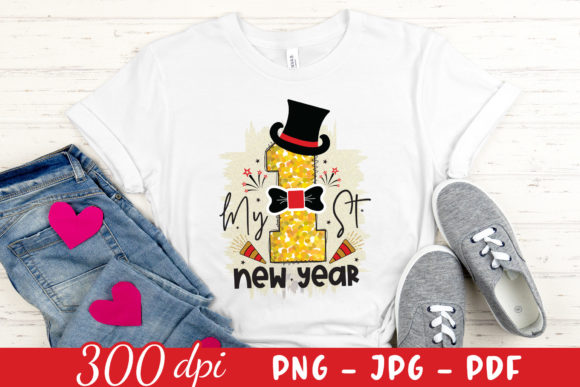
Reviewing My 1st New Year PNG for Embroidery
As a designer who spends half my life staring at digitizing software and the other half troubleshooting thread breaks on actual machines, I approach every new graphic with a healthy dose of skepticism. We have all been there: you find a cute design online, it looks perfect in the preview, but the moment you try to translate it into thread, the details vanish or the fabric puckers beyond repair. Today, I am taking a close look at My 1st New Year PNG - Happy New Year PNG. While this asset is marketed primarily as a sublimation design for Crafts and Graphics, I want to evaluate its potential for real-world embroidery projects. Can this eye-catching graphic survive the needle? Let’s dig into the practicalities.
First Impressions and Visual Personality
The first thing that strikes me about My 1st New Year PNG - Happy New Year PNG is its celebratory mood. It captures that specific, joyful energy of a baby’s first milestone mixed with the general excitement of the holiday season. The layout appears balanced, with a quote that serves as the focal point surrounded by graphics that frame the text rather than overwhelming it. For an embroidery designer, this is crucial. We need clear hierarchy. If every element fights for attention, the final stitched product looks cluttered and amateurish.
The visual personality here is soft yet bold enough to be read from a distance. This duality is rare in holiday designs, which often lean too hard into intricate snowflakes or tiny stars that simply do not translate well to thread. When I visualize this design on a hoop, I see potential for a clean, modern aesthetic. It feels like it belongs on high-quality cotton or a soft fleece, suggesting a premium handmade product rather than a mass-produced item. The "eye-catching graphics" mentioned in the description suggest strong lines, which is a good sign for stitch definition, provided the digitizer respects the original art’s integrity.
Real-World Application: The Baby Sweatshirt Test
To truly test a design, you have to imagine it on a specific product. I pictured using My 1st New Year PNG - Happy New Year PNG for a custom baby sweatshirt. This is a huge seller for Etsy sellers and small shop owners during the December rush. Parents love personalized items that mark milestones, and a "first New Year" shirt is a classic keepsake.
In this scenario, the design needs to sit comfortably on the chest without feeling heavy. Babies have delicate skin, so the back of the embroidery matters just as much as the front. If the original PNG has dense areas, a skilled digitizer would need to convert those into lighter fill stitches or use applique techniques to reduce bulk. The quote portion of the design would likely require a satin stitch for clarity, while the surrounding graphics might benefit from a mix of running stitches for outlines and light fill stitches for larger shapes. The result should be a soft, flexible embroidered patch feel rather than a stiff cardboard-like texture. If executed well, this becomes a high-value personalized gift that parents will cherish and photograph, driving organic social media engagement for your craft business.
Navigating Fabric and Hoop Constraints
While the design is versatile, we must discuss where it might struggle. Embroidery is unforgiving of poor planning. If you are working with textured fabrics like terry cloth towels or thick fleece, the finer details of the graphics in My 1st New Year PNG - Happy New Year PNG could get lost. In these cases, increasing the stitch density slightly or using a contrasting thread color can help maintain visibility. However, beware of going too dense on stretchy fabrics like jersey knits used for t-shirts. Without proper stabilizer, the fabric will pucker, distorting the beautiful quote and ruining the professional look.
Hoop size is another critical factor. This design seems suited for a standard 4x4 or 5x7 hoop. If you attempt to shrink it down for a small cap or a baby hat, the lettering may become illegible. Tiny lettering is the enemy of embroidery; threads merge, and spaces close up. I always recommend testing the design on scrap fabric first, especially if you plan to use it on curved surfaces like caps. The curvature changes how the design sits, and what looks flat on a screen can look warped on a hat. For dark fabrics, you must check your thread colors carefully. A design that pops on white might disappear on navy blue unless you adjust the palette for high contrast.
Commercial Viability and Brand Consistency
For commercial embroidery and digital product sellers, consistency is key. Using My 1st New Year PNG - Happy New Year PNG across a product line—such as matching tote bags, aprons, and pillow covers—can create a cohesive holiday collection. The design’s aesthetic is neutral enough to fit various branding styles, from rustic farmhouse to modern minimalist. This flexibility increases its value as a design asset. When customers see a consistent look across your Etsy listings or craft fair booth, it builds trust. They perceive your brand as professional and thoughtful.
Moreover, the "giftability" factor is high. Items featuring this design are not just products; they are memories. A kitchen towel or a blanket with this embroidery becomes part of a family’s holiday tradition. This emotional connection drives buyer engagement and repeat customers. However, remember that perceived value comes from execution. A sloppy stitch-out devalues the design, no matter how cute the original graphic is. Precision in hooping, tension adjustment, and thread selection is what turns a simple graphic into a premium finished product.
Practical Designer Notes for Best Results
Before you load this file into your machine, keep these practical tips in mind to ensure success:
- Check the License: Since this is originally described as a sublimation design, confirm whether you have the rights to use it for commercial embroidery projects. Some licenses restrict usage to physical goods only, while others allow digital resale. Always read the terms before selling finished items.
- Digitize with Care: If you are converting this PNG yourself, pay attention to stitch direction. Changing the angle of satin stitches can dramatically change how light hits the thread, adding depth to the graphics.
- Test on Scrap Fabric: Never skip this step. Test on the exact fabric type you plan to use for the final product. Check for puckering, thread breaks, and color contrast.
- Use Proper Stabilizer: Match your stabilizer to your fabric. Cut-away stabilizer is best for knits and stretchy fabrics, while tear-away works well for woven cottons. This ensures the design stays crisp after washing.
- Mockup in Black and White: Convert your digital mockup to grayscale. If you cannot distinguish the elements in black and white, the stitch definition will likely be poor. Adjust your digitizing to enhance contrast where needed.
- Consider Applique: If the graphics are large and solid, consider using an applique design approach. This reduces stitch count, saves time, and creates a softer feel on garments like baby clothes.
Final Verdict
My 1st New Year PNG - Happy New Year PNG is a promising candidate for holiday embroidery projects. Its strength lies in its clear layout and celebratory theme, which resonate well with customers looking for meaningful, personalized gifts. While it requires careful handling regarding fabric choice and stitch density, the potential for creating high-quality, commercially viable products is significant. For embroidery designers and craft business owners willing to put in the prep work, this design can be a standout addition to your holiday catalog. Just remember: the magic is not just in the graphic, but in how you bring it to life with thread and needle.