Reviewing Happy St Patrick s Day PNG, JPG, PDF for Embroidery
As a designer who has spent countless hours digitizing and stitching out holiday motifs, I approach every new Graphics asset with a critical eye. We often see listings for festive items, but the transition from a digital image to a tangible handmade product is where the real work begins. Recently, I evaluated the Happy St Patrick s Day PNG, JPG, PDF to determine its viability for real-world embroidery project applications. While the product description highlights its utility for sublimation on mugs and signs, my focus was strictly on how these visual elements translate to thread and fabric for craft business owners and Etsy seller communities.
First Impressions: Mood and Visual Personality
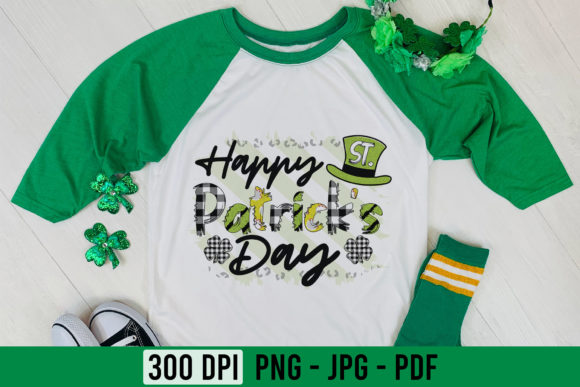
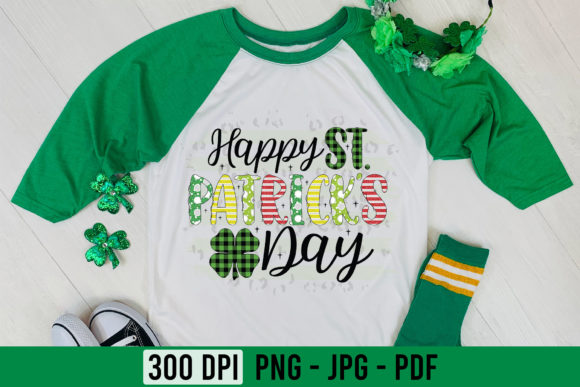
The immediate appeal of the Happy St Patrick s Day PNG, JPG, PDF lies in its celebratory tone. The design features eye-catching graphics paired with a beautiful quote, creating a mood that is both festive and inviting. For those of us in the Crafts sector, visual personality is paramount. A design must not only look good on a screen but also possess the structural integrity to hold up when converted into stitches. The layout appears balanced, with a central focus that draws the eye, which is crucial for items like tote bag design or front-center sweatshirt embroidery.
However, as an experienced reviewer, I look beyond the surface. The "eye-catching" nature of the graphics suggests high contrast and bold lines. In embroidery, this usually translates well to fill stitch areas and clear running stitch outlines. The quote element implies typography, which requires careful handling to ensure legibility once stitched. If the lettering is too thin or intricate, it may get lost in the fabric texture, especially on textured materials like terry cloth towels or heavy denim.
Real-World Application: From Digital File to Finished Product
To truly test the value of the Happy St Patrick s Day PNG, JPG, PDF, I imagined several common scenarios faced by small shop product creators. Consider a custom personalized gift order for a boutique client requesting a set of kitchen towels for March. The design’s festive theme fits perfectly here. However, because this asset is provided in raster formats (PNG, JPG) and vector/print-ready PDF, it is not a native machine embroidery design file like PES or DST. This distinction is vital.
For an embroidery designer, this means the workflow involves using the graphic as a reference for manual digitizing or tracing within software. The clarity of the PNG allows for precise edge detection, which helps in creating clean applique design boundaries if one chooses to use fabric patches instead of dense stitching. For a custom apparel piece, such as a child’s shirt, the design could be scaled down for a pocket placement. The vibrant colors suggested by the graphics would pop against white or pastel fabrics, enhancing the holiday embroidery aesthetic.
Another practical use case is the creation of an embroidered patch. Patches require high stitch density to prevent fraying and ensure durability. The bold elements of the Happy St Patrick s Day PNG, JPG, PDF are well-suited for this, as they can be filled with satin or fill stitches without losing their shape. This makes the design a strong candidate for commercial embroidery projects where durability and brand consistency are key.
Technical Considerations and Fabric Compatibility
While the visual appeal is strong, there are technical constraints to consider. Since the Happy St Patrick s Day PNG, JPG, PDF is primarily a graphic asset, adapting it for embroidery requires attention to hoop size limitations. If the original graphic is complex, shrinking it for a small hoop, such as a 4x4 inch frame for baby items, might cause detail loss. Tiny lettering in the quote could become illegible if the scale is reduced too much. It is essential to test the design on scrap fabric first to gauge the minimum viable size.
Fabric texture plays a significant role in the final outcome. On smooth cotton or polyester blends, the design will likely stitch out cleanly. However, on stretchy fabrics like jersey knits for t-shirts, proper stabilizer selection is non-negotiable. Without adequate support, the thread colors may pucker, distorting the beautiful quote and graphics. For dark fabrics, the reviewer must consider whether the design includes enough light-colored elements or if additional underlay stitches are needed to make the colors stand out. Testing the design in black and white mockups can help assess contrast before committing to thread.
Curved surfaces, such as caps or hats, present another challenge. The design’s layout must be checked for distortion when applied to a curved hoop size. Elements that look balanced on a flat plane may appear skewed on a cap front. In such cases, simplifying the design or adjusting the digitizing path to follow the curve can mitigate issues. Additionally, dense stitch areas should be minimized on lightweight fabrics to prevent stiffness and discomfort, ensuring the finished product remains wearable and soft.
Enhancing Brand Value and Customer Trust
For creative entrepreneurs and digital product sellers, the quality of the source material directly impacts perceived value. Using a high-resolution graphic like the Happy St Patrick s Day PNG, JPG, PDF as a basis for embroidery demonstrates professionalism. When customers see crisp, well-defined stitching that mirrors the promotional images, it builds trust. This consistency is crucial for boutique branding and repeat business.
The versatility of the design allows for diverse product lines. Beyond apparel, it can inspire home decor items like pillow covers or blankets. Each application offers an opportunity to showcase craftsmanship. For printable mockup creation, the JPG and PNG files are invaluable. They allow sellers to create realistic previews of their embroidered items for online listings, enhancing buyer engagement without needing to stitch every color variation physically. This efficiency is a significant advantage for small business merchandise operations.
Practical Designer Notes for Best Results
To maximize the potential of the Happy St Patrick s Day PNG, JPG, PDF, I recommend the following steps for fellow designers and makers:
- Verify Licensing: Before selling finished product items or using the graphic in commercial designs, confirm the license terms provided with the download. Ensure it covers commercial use for physical goods.
- Digitize with Care: Since this is not a pre-digitized embroidery file, use professional software to convert the graphic. Pay close attention to node placement and stitch angles to preserve the design’s integrity.
- Test Thread Colors: Match the digital colors to physical thread charts. Screens display RGB colors, while threads reflect light differently. A test stitch-out is essential to confirm the thread colors achieve the desired vibrancy.
- Check Stitch Density: Avoid overly dense fills in large areas to reduce production time and thread usage. Optimize the design for efficiency without sacrificing visual impact.
- Inspect Small Details: Zoom in on the quote and graphic edges. Ensure that no lines are too thin to stitch reliably. Adjust widths as necessary for the chosen fabric type.
- Use Proper Stabilizer: Select the right stabilizer cut-away or tear-away based on the fabric weight and stretch. This ensures the design remains stable during washing and wear.
In conclusion, the Happy St Patrick s Day PNG, JPG, PDF serves as a strong foundational asset for holiday embroidery projects. While it requires technical adaptation for machine use, its visual strength and festive appeal make it a valuable addition to any design assets library. By approaching it with a designer’s mindset and adhering to best practices in digitizing and stitching, crafters can produce high-quality, professional results that delight customers and elevate their brand.