Review: Don’t Let Today Be a Waste Design
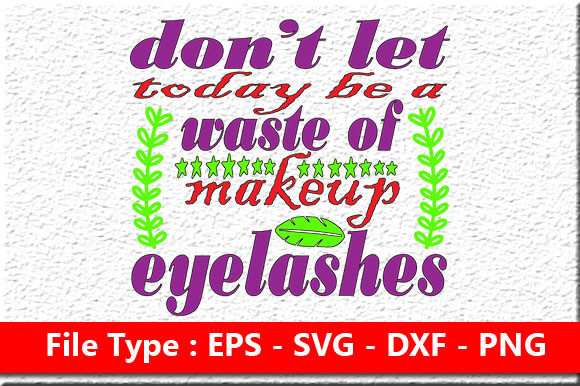
As an embroidery designer who spends more time staring at digitized paths than I care to admit, I have learned that not every cute graphic translates well into thread. We often browse Crafts marketplaces, see a witty quote or a charming illustration, and immediately imagine it stitched onto a hoodie. But the gap between a digital Graphics file and a tangible, high-quality finished product is where many projects fail. Recently, I pulled the Makeup Quote Design Don’t Let Today Be a Waste into my workspace to evaluate its potential for real-world application. This isn’t just about whether the text is readable; it is about how this specific design behaves under the needle, how it appeals to modern buyers, and whether it holds up in a commercial setting.
First Impressions: Mood and Visual Personality
The first thing that strikes you about Makeup Quote Design Don’t Let Today Be a Waste is its attitude. It is playful, slightly sassy, and deeply relatable to anyone who views their morning routine as a form of self-care rather than vanity. The inclusion of eyelashes adds a visual anchor that balances the typography, preventing the design from feeling like plain text. From a layout perspective, the composition feels balanced, with the graphical elements supporting the message rather than overpowering it. For an embroidery project, this balance is crucial. If the graphic elements are too dense, they can create puckering; if they are too sparse, the design lacks impact. This design sits comfortably in the middle, suggesting a moderate stitch density that should be manageable on most home machines without excessive stabilizer manipulation.
The Real-World Test: A Tote Bag Scenario
To truly judge a design, you have to imagine it on a product. I envisioned using this file for a custom canvas tote bag design. Canvas is a sturdy fabric, but it has a distinct weave that can swallow small details. I loaded the digital embroidery file into my software to simulate the stitch-out. The quote’s length means it will likely require a medium to large hoop size, such as a 5x7 or 6x10 inch frame, to ensure the lettering remains legible. If you try to shrink this down for a small pocket or a baby item, the intricate curves of the eyelashes and the thinner strokes of the font might merge, resulting in a muddy appearance. For a tote bag, however, the scale works beautifully. It becomes a statement piece, perfect for a makeup artist’s kit or a daily carry-all for beauty enthusiasts.
Versatility in Apparel and Home Decor
Beyond tote bags, this design shines in custom apparel. Imagine it embroidered on the chest of a oversized sweatshirt or the back of a denim jacket. The sweatshirt embroidery market is saturated with generic phrases, so a design with this specific personality stands out. It appeals to a demographic that values humor and self-expression. However, when moving from flat canvas to stretchy knits or textured fleece, you must adjust your approach. A cut-away stabilizer is non-negotiable here to prevent the fabric from distorting under the weight of the stitches. The design’s structure suggests it could also work as an embroidered patch, which you could then iron or sew onto various garments, adding versatility for Etsy seller inventory.
Technical Considerations for Stitching Clarity
Let’s talk about the technical side. While the product description mentions EPS, SVG, PNG, and DXF files, it is vital to understand what these mean for embroidery. These are primarily vector and image formats, often used for cutting machines or printing. For machine embroidery, you typically need a specific stitch file (like PES, DST, or JEF). If this package does not include native embroidery formats, you will need to use digitizing software to convert the SVG or EPS into a stitch file. This gives you control over the satin stitch width for the outlines and the fill stitch pattern for any solid areas. If you are converting it yourself, pay close attention to the thread colors. High contrast is key. Using a dark thread on a dark fabric will render the eyelashes invisible. Always test your color combinations on scrap fabric before committing to your final garment.
Another critical factor is the fabric texture. On smooth cotton or polyester blends, the design will look crisp and professional. On rougher textures like linen or burlap, the finer details of the eyelashes might get lost. In such cases, consider simplifying the design or increasing the stitch count slightly to ensure coverage. For baby embroidery, softness is paramount. Ensure that the back of the stitching is clean and free of scratchy jump stitches, as this design might end up on items that touch sensitive skin.
Commercial Viability and Brand Consistency
For craft business owners and small shop product creators, consistency is brand currency. This design fits well within the beauty and lifestyle niche. It is not just a random quote; it speaks to a specific community. When used in commercial embroidery, it can help build a recognizable aesthetic. Whether you are creating holiday embroidery gifts or everyday personalized gift items, the tone of this design is upbeat and engaging. It encourages buyer engagement because it is shareable. People love posting photos of products that reflect their personality, and this quote is inherently Instagram-friendly.
However, before listing this as a design assets product or selling finished goods, you must verify the licensing. Since the file types listed are general graphics formats, clarify if the creator grants commercial rights for physical products. Many designers allow personal use but require an extended license for commercial sales. Never assume. Check the terms explicitly to protect your handmade product business from legal issues.
Practical Designer Notes for Success
- Test on Scrap Fabric: Always run a test stitch-out on the same type of fabric you plan to use for the final product. This reveals tension issues and registration errors.
- Check Thread Contrast: Use a color wheel to select threads that pop against your fabric. For dark fabrics, consider using a lighter underlay or backing to enhance visibility.
- Review Stitch Density: If converting from SVG, ensure the density isn’t too high for lightweight fabrics, which can cause perforation or stiffness.
- Confirm Hoop Size: Measure the design dimensions against your machine’s maximum hoop capacity. Do not attempt to resize beyond recommended limits, as this distorts stitch proportions.
- Inspect Small Details: Zoom in on the eyelash details. If they are too thin, they may break or look jagged. Adjust the minimum stitch length in your digitizing software if necessary.
- Mockup in Black and White: View the design in grayscale to check for value contrast. If it looks flat in black and white, it will lack depth in color.
- Use Proper Stabilizer: Match the stabilizer to the fabric. Cut-away for knits, tear-away for wovens, and wash-away for delicate or sheer materials.
Final Verdict on Usability
The Makeup Quote Design Don’t Let Today Be a Waste is a strong contender for designers looking to add personality to their portfolio. It bridges the gap between simple text and illustrative art, making it versatile for various applique design adaptations or standalone embroidery. While it requires careful attention to scale and fabric choice, its potential for creating eye-catching printed mockup previews and tangible goods is high. For the creative entrepreneurs and makers who take the time to prep their files and respect the material constraints, this design offers a reliable path to creating products that customers genuinely connect with. It is not just about stitching a quote; it is about stitching an attitude that resonates.